Key takeaways
- Stain soaks in and shows the wood grain, while paint forms a surface film.
- Transparent stains show the most grain, and solid stains hide more.
- Horizontal surfaces such as decks wear faster than vertical ones.
- Wash and let the wood dry before coating.
Stain
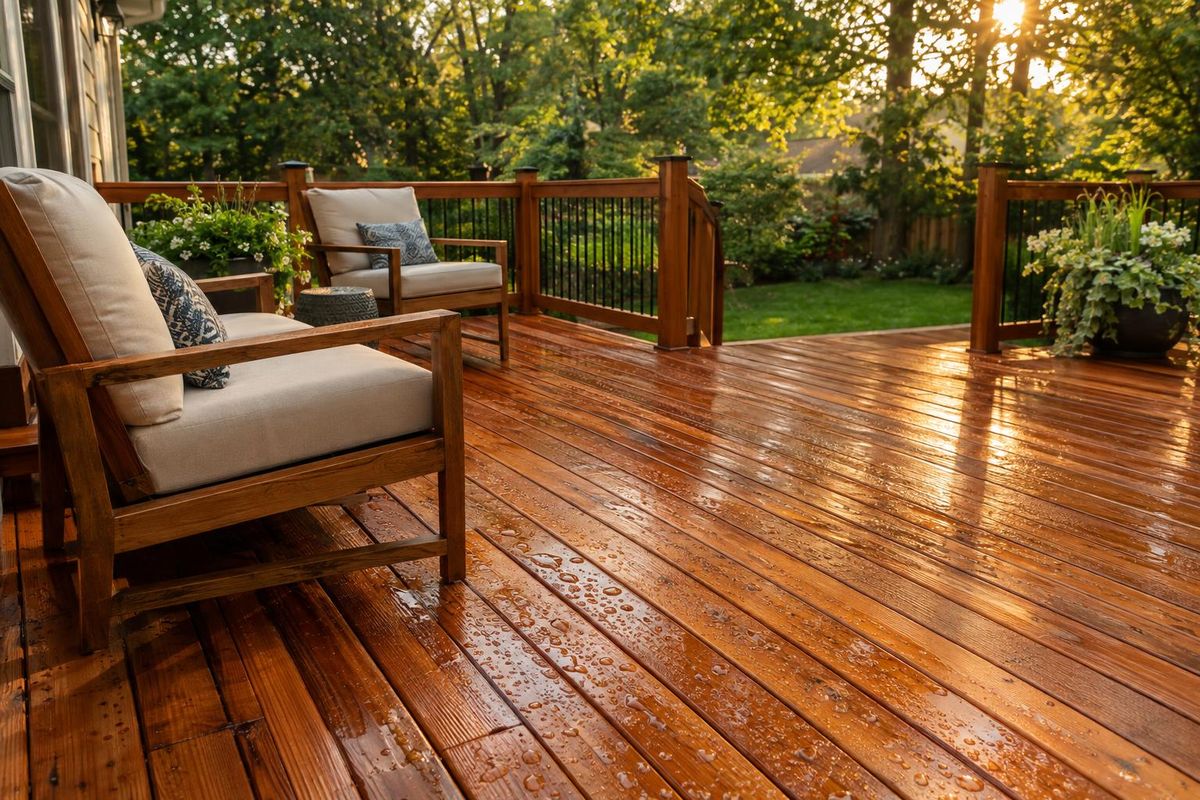
Stain penetrates the wood and is available in transparent, semi-transparent and solid versions. It shows grain and texture and tends to fade gradually rather than peel, which makes recoating easier.
Transparent finishes show the most natural wood and need the most frequent upkeep, since they offer less protection from sun.
Paint
Paint forms a solid film over the wood. It offers strong color choice and good protection when applied well, and it hides wood flaws. On decks, paint can peel with heavy foot traffic and moisture, so it needs careful prep and suitable deck products.
On vertical surfaces such as fences and railings, paint can look fantastic and last well.
Which is right
Decks and steps usually suit penetrating stains or special deck coatings. Fences work with either, depending on whether you want grain or a solid color. Railings and posts often suit paint or solid stain.
In Tennessee's humidity, a finish with mildew resistance matters as much as color.
Prep and timing
New wood needs time to dry before coating. Older wood needs washing, sanding and sometimes stripping. We wash, brighten and dry the wood so the finish soaks in or bonds properly.
Plan for a stretch of dry weather, since rain on fresh stain causes problems.
Quick answers
How often should a deck be stained?
It depends on sun, traffic and product. Faded color, water that no longer beads and a rough surface are signs it is time.
Can I stain over old paint?
Not successfully. Old paint has to be removed so the stain can soak in.
Is clear sealer enough?
Clear sealers offer less UV protection, so they fade and need coating more often.